

 August 15, 2025
On self-restraint preceding grace.
God seeks three things from the baptised: from the soul – genuine faith; from the body – self-restraint; and from the tongue – truth.
– St Gregory the Theologian
The first and last of these are plain to see, and most people would not dispute them. Yes, they’d say, if we claim to believe in a God we can’t see, then faith is necessary. And yes, ideally we would always tell the truth. But the idea of self-restraint is not an easy pill to swallow in this world of affluence and happiness-seeking. The notion of paring back our ‘needs’ (wants) is anathema to our modern way of life.
At the most basic level, self-restraint involves moderating our intake of daily victuals, such as food and drink. It’s also about looking after our body in a broader sense: ensuring we get enough sleep, exercise, and that we balance our work and leisure time. For a deeper assessment, we could consider how devoted we are to pursuits such as bodybuilding or beautifying ourselves with cosmetics. It’s not difficult to see that in a world of plenty, we can quickly progress from simply satisfying our needs to engaging in an immodest, potentially prideful, amount of self-nurturing.
But surely if we are to restrain ourselves, we need good reasons. The first of which is no doubt because we want to be physically healthy and productive. A second motive could be that we don’t want to contribute to anyone else’s suffering by taking more than we need. This would see us make such sacrifices as giving to the poor, offering our seat to the elderly, and even smaller gestures like sharing a blanket with our spouse. But once these are covered off, what’s to stop us being as indulgent as we like? Certainly, if our sole focus is on the here and now, we might rightly wonder what could be wrong with giving ourselves the best life possible. Barring financial reasons, what earthly purpose would there be in denying ourselves anything?
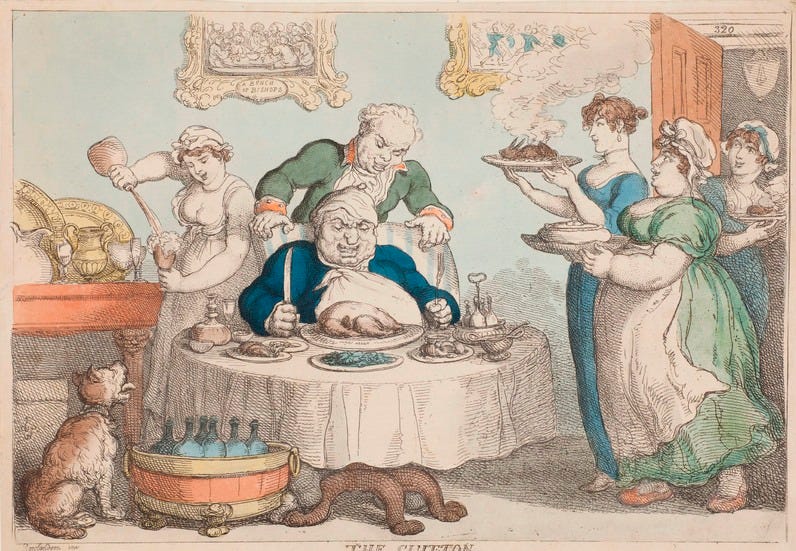
Indeed, society’s modern mantra is ‘you deserve it,’ trickling down to the familial unit, which fosters personal happiness as each member’s main goal: ‘whatever makes you happy.’ There is very little promotion of sacrifice. Many instead prioritise the pursuit of wealth and status, encouraging a child to undertake a prestigious law degree, for example, whilst turning their noses up at the idea of learning a solid trade. An interesting famous example of this is St. Thomas Aquinas, whose family worried about their social position and thus tried – quite desperately, so it is said, sending a prostitute to their young son’s bedchamber to try and tempt him away from his vocation – to stop him becoming an impoverished Dominican.
And yet, if we acknowledge that there is more to life than earthly wealth, a self-indulgent lifestyle poses a problem. For if we view our existence as a longer-term proposition, which incorporates an afterlife, then physical matters are not our only concern. If they become too large a focus in our lives, there will be insufficient room for spiritual sustenance or growth.
To get into God’s good books, so to speak, is to seek His grace. And Christianity teaches that to do so, one must seek a state of detachment from worldly comforts. This was exemplified most obviously and outstandingly in the birth of Jesus in a lowly stable, but significantly also by John the Baptist. This saint not only showed incredible humility and bodily self-restrain in his day-to-day living but also adhered to and preached the ‘golden rule’ of paring back one’s own needs and giving to others.
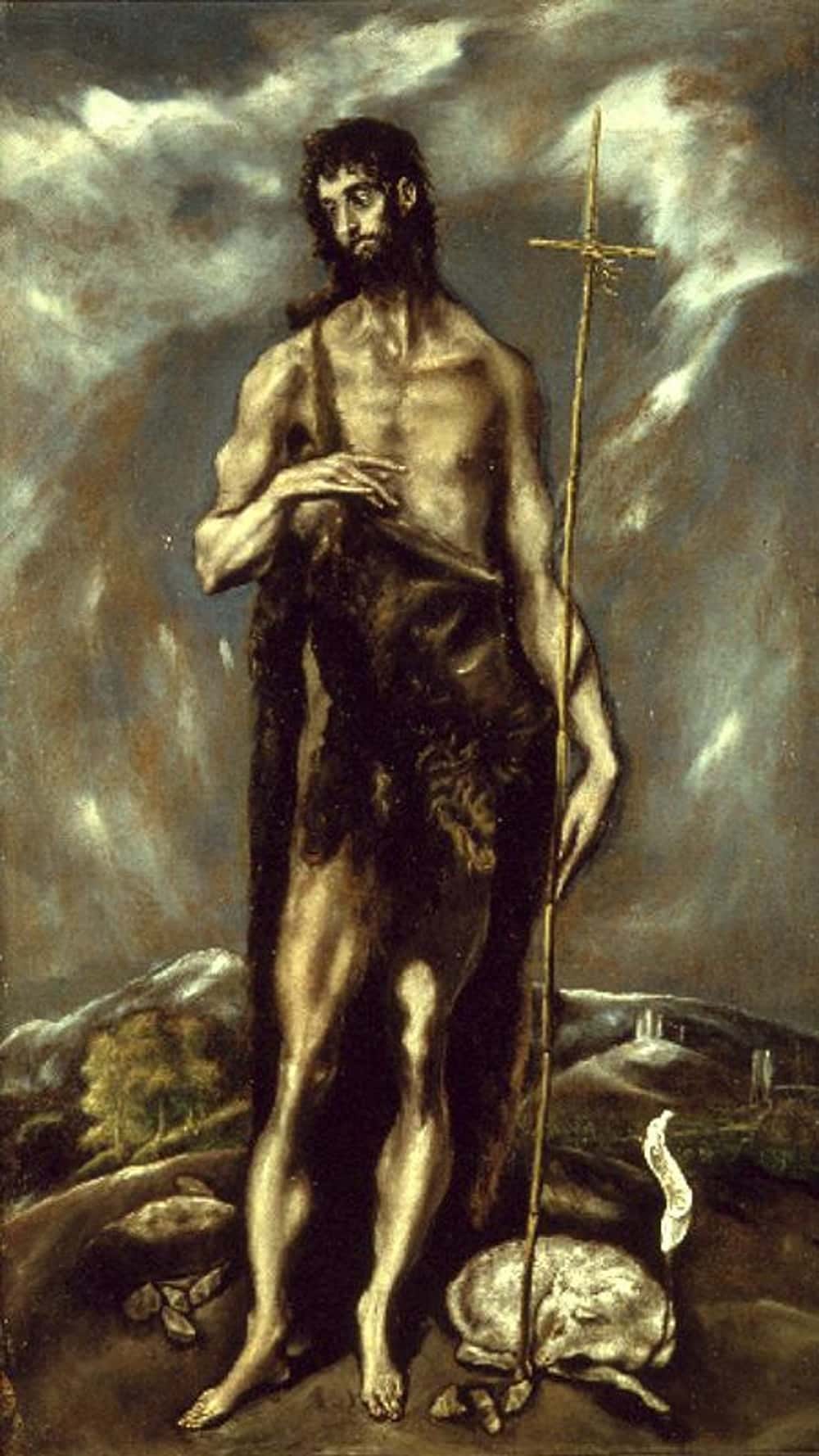
John the Baptist lived a life of poverty. He wore a camel hair shirt and subsisted on what he could find in nature: famously, locusts and honey. He cared nothing for the pleasures of this world. He urged people to turn away from their indulgent lives and preached often about justice and how we should treat others; to share what we have and not take more than we need: “If you have two shirts, give one to the poor. If you have food, share it with those who are hungry” (Luke 3:11). He was simple and generous. John was effectively saying “this is how you should live and treat each other in order to be ready for what (Who) is coming next” – namely, he was preparing the way for Jesus and telling the people what they needed to do to be in a state of grace and ready to receive Jesus. He gave “testimony of the Light” (John 1:8), preaching the way to live a good life and repent of anything standing in the way of this.
But how to define ‘living the good life’? Unless there are clear rules for what is objectively right and wrong, all becomes subjective and at the whim of changing political and social movements. Our grandparents, for example, did not need to consider their carbon footprint or whether they were LGBTQI+ allies to feel good about themselves. So how does one stay on the right path? Sharing and caring is all well and good and never goes out of fashion, but the Christian way asks even more. It asks us to effectively ‘die to ourselves’ and become a new creation. Why would God want this for us? Would He want us to suffer as much in our bodies as John the Baptist did?
Many have asked these questions, and we can find answers in the great books. St Thomas à Kempis, in his hugely influential book The Imitation of Christ, is most definite and convincing: “for God desires that you learn to bear trials without comfort, that you may yield yourself wholly to Him, and grow more humble through tribulation.” Even St. Augustine, who famously found it very hard, humorously acknowledged that it was the necessary path: “Give me chastity and self-control, but not yet”. And C. S. Lewis: “Submit to death, death of your ambitions and favourite wishes every day and death of your whole body in the end: submit with every fibre of your being, and you will find eternal life.” In his famous Narnian tales, Lewis demonstrates, through the turkish-delight-loving character of Edmund, what occurs when we mindlessly submit to our every desire. Edmund ate without worrying about the consequences and did not realise that he was bringing danger upon his siblings and upon Aslan, who then gives his own life to save him from the witch. We could say, then, that ‘dying to ourselves’ is to live a good life; a selfless life, where we humble ourselves in favour of others.
So why do we find this death to self so hard? What is standing in our way? Often, it’s pride. I’ve done this great thing and I want the world to know and praise me. Or, I can’t let this certain person talk to me like that, and I won’t let him get away with it. In this way, we indulge our own will rather than taming it.
But it’s also worldly freedom and extravagance that hinder us. Modern society is such that the lifestyle we have given ourselves effectively removes sacrifice from the equation. We might examine this particularly in light of post-feminist women who now seek to ‘have it all’ as a matter of course, in emulation of their male counterparts. Gone is their mindset of service to family and community, replaced with a modern-day coveting of goods – career, wealth, status – that were traditionally the fruit of men’s pursuits. But as most women discovered along the way, something had to give.
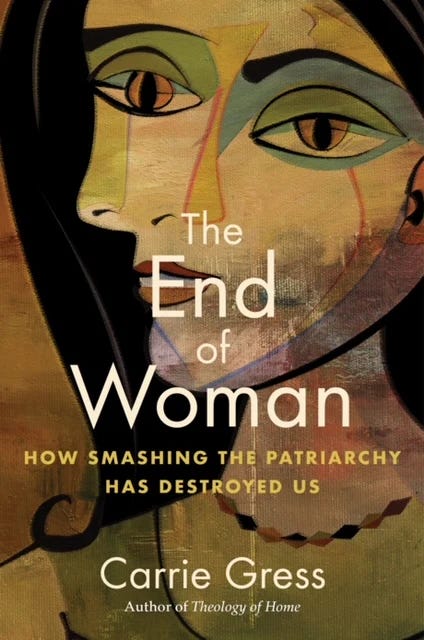
Carrie Gress, in her excellent book ‘The End of Woman: how smashing the patriarchy has destroyed us,’ outlines the history of the feminist movement and how in many ways it was doomed from the start in its attempts to emulate the male world rather than embrace, protect and enhance the female one. Now, women have become like men and men are becoming like women. Interchangeable. And all of this contributes towards the death of the family structure. The female identity, says Gress, “has been cobbled together with this grasping at manhood, while what it means to be a woman has dissolved and is now an unanswerable question.” It has also resulted in a celebration of female failure – that is, doing the job badly or begrudgingly – most noticeable in the ‘slovenly mother’ trend, where mothers proudly boast on social media about not cleaning their house and post videos of the disastrous ‘meal’ they just served their confused and disappointed children. The promise of personal fulfilment has lured us into turning our backs on our families. We have forgotten the simple acts of humility that serve others so well, while convincing ourselves that the most important contribution we can make to the family unit is financial or merely self-fulfilment – “if I’m happy I can be a better mum”.
If we can somehow manage to ignore or minimise the influence of feminism and other self-centred, modern-day afflictions, and can learn to restrain our own ambitions to serve others, we will open ourselves up to virtues such as humility and patience. We will become more ready to receive God’s grace. John the Baptist spent no time worrying about himself or how he should alter himself to become more acceptable to the world, but rather, he passionately gave advice to go against the world – “collect no more taxes than is necessary; don’t make false accusations of others” (Luke 3:13-14). His humility and self-perception we such that though he was “not fit to untie the strap of His sandals” (Luke 3:16), he nevertheless worked tirelessly for Jesus and never for his own glory or gain.
In seeking to become happy, the irony is that self-restraint itself makes us so. We know that living a decadent-but-meaningless life can wear thin and that doing good for ourselves and others brings us joy. Suffering comes with reward: not just in heaven, but here on Earth. The most everyday example of this is when we dread doing exercise but feel great afterwards. Our human nature is such that, though we resist, we thrive on what is good. So does God. And when we are on the same page as Him, we receive more and more from Him. Grace does not come out of the blue. It comes to those who lean into it. “But seek ye first the kingdom of God, and his righteousness; and all these things shall be added unto you” (Matthew 6:33).

 The Bowditch Pitch
Comments are closed.