

 May 28, 2025
Growing up in the decades following the Second Vatican Council, which saw major changes wrought upon the Catholic Church and the Mass of the Ages, I had only ever been exposed to the ‘Novus Ordo’ – the new order Mass. As a teenager, I was decidedly unimpressed by my weekly attendance at Mass and had trouble seeing that it was in any way an homage to something supernatural. I couldn’t see anything sacred or mysterious. It was all a bit cringey and lowbrow: the folksy, guitar-accompanied songs, the repetitive responses we all muttered, feeling like dolts, the cloying focus on love of mankind to the near-exclusion of reverence for God – even while in His house, the ageing demography; all these elements were uninspiring and, spiritually, prevented me from finding and wanting to walk on the narrow path toward what St. Augustine terms ‘the City of God,’ and instead had the effect of keeping me on the wider, more populous path towards ‘the City of Man’.
In more recent years, the attitude and undertakings of Pope Francis did very little to push me back onto the right path. He, too, seemed to lead his people towards the City of Man. He aimed to meet people where they were, albeit in the way that Jesus did, welcoming all to God’s love, but largely failing to conform them to God’s plan. He was, as renowned UK Catholic commentator Gavin Ashenden recently noted, ‘an appeaser,’ when in our troubled culture, we needed a Pope to be ‘a leader of the resistance’.
There was one notable thing that Pope Francis did, however, that bore good fruit. While on the surface it was detrimental to some of the faithful, it had the effect of waking others like me up from our tepidity. It was his 2021 motu proprio, Traditionis Custodis, which severely restricted the Traditional Latin Mass (TLM). This order from Francis was no doubt an attempt to put the faithful all on the same path but, whether intentional or not, ironically opened the door of discovery for many more of us to the Latin Mass. And once we came to know and love the old Mass, Francis’ directive seemed, indeed, a clear move away from the City of God; a forced slackening of the practice of our faith. It caused some of us to examine more harshly the new Mass and the many ways in which it significantly differs from the longstanding traditional form.
Just before this time, a major world event occurred that had already caused some of us to reevaluate the importance of faith in our lives. The absolute circus of the covid* pandemic response was felt as a rupture in all our lives. During the draconian lockdowns, our overlords told us that we were not allowed to go to Mass. The very fact that most of the faithful seemed okay with this was telling. It revealed that they were indeed residents of the City of Man. What was most important to them was earthly survival and they were madly terrified of this ‘novel’ health threat. Physical health had become their God, in a way, and as such they were content to put their faith in people – in the ‘experts’ – rather than in God.
If we were intent on being different to those dwelling in the City of Man, then, how would that look in such an era of spiritual laxity? Pope Francis and the state-sanctioned covid machine were urging us to be more accepting of change, as it pertained to our faith. While one warned us about ‘backwardness’ and ‘rigidity,’ the other – via health bureaucrats and, sadly, church officials – tried to convince us that our physical health trumped God’s commandments. The decrees of ‘don’t go to the Latin Mass’ and ‘don’t go to Mass at all!’ had a striking effect. It got many of us wondering: what was going on? What malevolent force was trying to turn souls away from God?
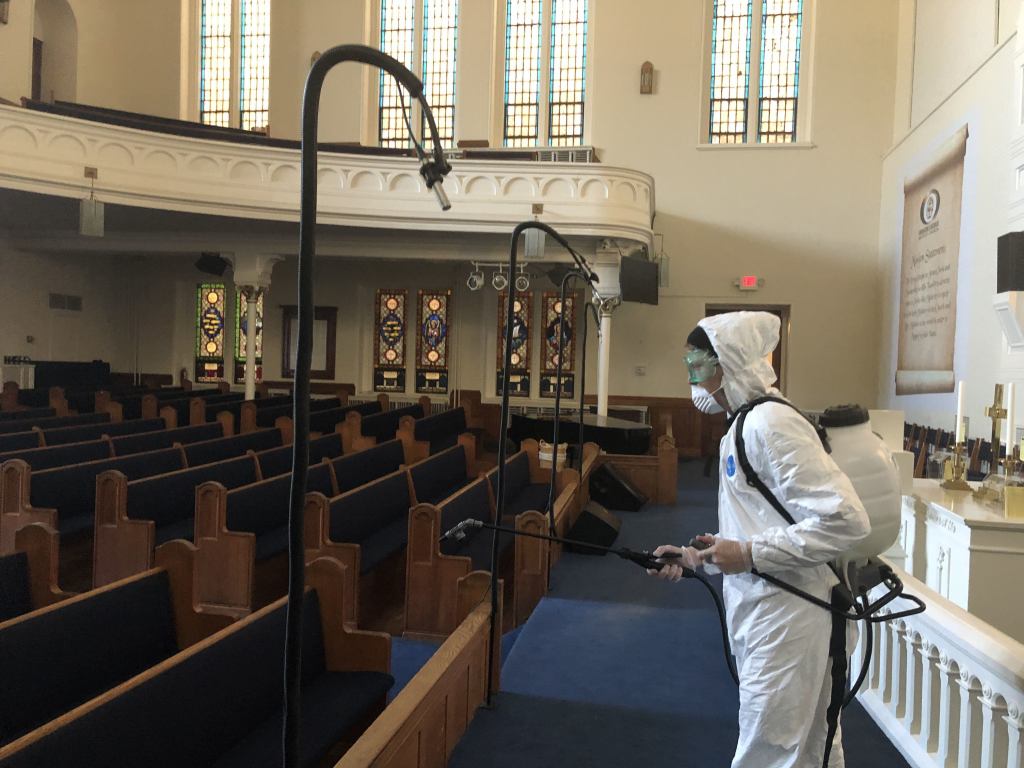
There is nothing like being told you’re not allowed to do something to make you want to do it! To make a fuss, though, it would need to be worth it. It would require a full commitment. And so, one of the silver linings of Pope Francis’ pontificate, in conjunction with the covid restrictions, I believe, was that there was an awakening of hitherto-weak Catholics and a move by them towards a stronger form of worship, viz. the Latin Mass. Certainly it is true that the Latin Mass is growing. For every ‘boomer’ who was happy to stay home and worship online during the lockdowns, there awakened many young souls who discovered the TLM, particularly in the US.
For some, however, this positive process of faith renewal came with transgressions. They engaged in an intense scrutiny of and, in some cases, antipathy towards Pope Francis. This was to some extent understandable, given the pontiff’s motu proprio, not to mention the barrage of seemingly uncatholic statements and decisions that emanated from his office – ‘who am I to judge,’ the Pachamama idol, ‘God wills all religions,’ and generally shunning traditional Papal ways viz. his clothing, his accommodation, his funeral arrangements. Understandable, but probably wrong.
But in as much as Francis (and covid) provided the jolt we needed to wake us up from our lukewarm habits, Pope Leo may well be the fresh start we need to stop being so negative and to once again trust and love Christ’s Vicar on Earth. We have been given a fresh start and, in some of the first words of Pope Leo himself (and King David), we must now sing a new song. From this, we will learn humility, obedience, and patience. If we don’t do this, we are effectively saying “God has to do it my way or I’m out.” What God permits, we should accept. As we should have done with Francis.
Many notable online Catholics who have been quite negative about Pope Francis, are in contrast being surprisingly positive about Pope Leo. It’s almost miraculous, though thankfully Leo has shown very promising signs regarding the traditions of the Church and his desire to adhere to them. Perhaps God is imbuing us with a starter-pack of grace, to get this papacy going in the best possible way. And Leo seems to be building on this with his focus on peace and love of Christ.
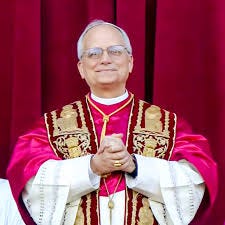
For those of us who feel we have endured a rough patch, we suddenly feel as though we again have the motivation to be enthusiastic Catholics. And with Pope Leo’s focus on peace and unity, it augurs well that he seems somehow beyond the left/right political paradigm. As an example, we hear that he’s a Republican voter yet is not afraid to criticise JD Vance on immigration. Perhaps it is just that we, en masse, already have too much respect for him to bring him down to the level of human politics. I hope so. Time will tell. We are still in the honeymoon phase of Pope Leo’s pontificate, but so far the signs are good.
Let us make use of this fresh start we have been given and join ourselves in spirit to Pope Leo, who represents Christ and whom we should love.
*I know that covid is meant to be capitalised, as it is an acronym, but I don’t like adhering to this, as it gives the manic event that surrounded the appearance of this flu-like virus far too much prominence.

 The Bowditch Pitch
Comments are closed.